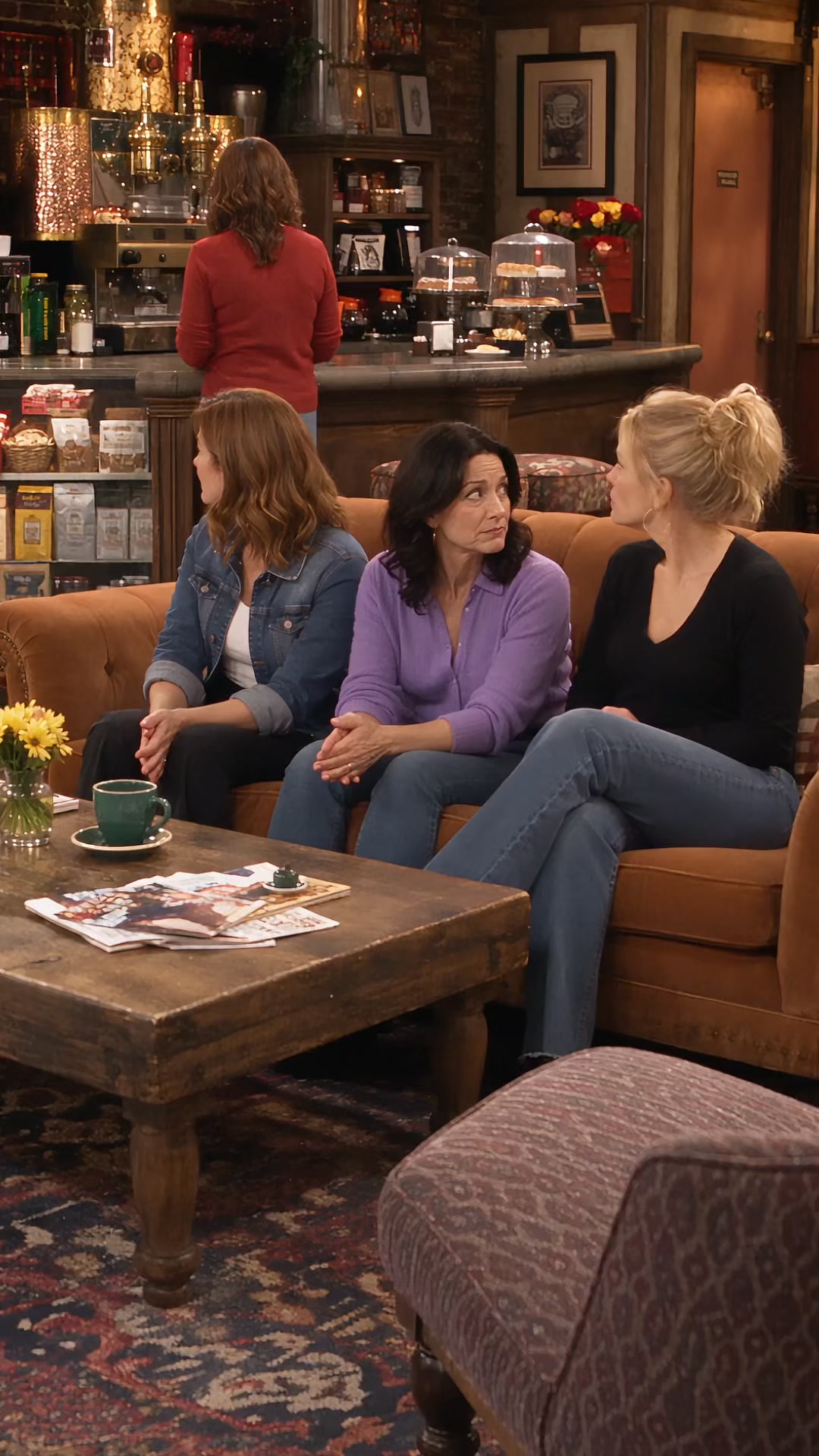
Why a skincare brand made a 5 minute ad that feels like a lost episode of Friends. What familiarity does to a viewer, the three things you can borrow, how to match the reference to your buyer, how to build one with AI, and a prompt that writes your first scene.
<aside> ⚡
See the ads your competitors are running, free. Start free at tryatria.com →
</aside>
Every ad has two jobs before it can sell anything. It has to make someone stop, and it has to make them care.
Most ads try to do both from zero, in about three seconds, with a stranger on screen. Familiar ads don't start from zero.
On 6 October, Koriderm, an anti-aging skincare brand, launched a 5 minute 10 second ad in the US. It's set in a coffee shop with an orange couch, brick walls and oversized mugs. Three women in their 50s sit gossiping while a fourth stands at the counter. Two seconds in, one of them asks: "Okay. Did Claire get something done?"
Nobody in the ad says the name of the show. Nobody has to. Anyone who watched it knows exactly where they are, who these people are and how this is going to go. The show spent ten seasons making people care about a group of friends in a coffee shop. Koriderm just pulled up a chair.
That's familiarity: a voice, a setting or characters your viewer already knows, carrying an ad they've never seen. Someone else already did the hard part. And when the reference belongs to your buyer's generation, it does your targeting too. Claire is 57. So is the woman Koriderm is selling to.
Video, 5 min 10 sec
Launched 6 October 2026 in the US. 5 minutes 10 seconds. View the ad in Atria →
Three friends in their 50s, one orange couch, five minutes of gossip, a sister in Seoul and a cream that "looks like toothpaste."
The ad's details and dialogue come from Atria's ad library. The breakdown and the advice are our read.
This playbook turns it into something you can brief on Monday.